Showing posts with label Cerebral Palsy. Show all posts

Wednesday, July 1, 2015

From Dublin to Chiang Mai, Swollen Ankles Included


Hi there! 

My name is Eniola, but called Enny by pretty much everybody. 

I was born in Lagos (Nigeria), raised in Waterford (Ireland) and studying in Dublin. I am supper bubbly, perhaps way too chatty and always with a smile. 

I am a 3rd year General Nursing student of Trinity College in Dublin. I love the placement! Going home knowing I have helped someone in a vulnerable place, honestly is the best feeling in the world. 

What’s next? I have huge plans, I have big dreams! Slowly but surely I will make these dreams a reality. 

The first of which began in Thailand on the 7th of June after being named the Thailand EIL Access Travel Award winner for 2015 alongside Maria and Melissa. 

Our 26 hour journey consisted of connecting flights from Dublin to London to Bangkok to Chiang Mai. It wasn’t until we were about to get off the 12 hour flight to Bangkok that I realised how ridiculously swollen my feet had gotten. My feet refused to budge and fit into my flat shoes and walking on it gave me pins and needles. Trying to get through security and immigration waddling in swollen feet was not a pleasant experience but it provided great humour for myself and the girls. I most definitely will remember to get Ted stockings in the future.  The excitement we shared is something that I will never forget as it was the farthest we had ever been away from home.

As we landed in Chiang Mai in one full piece, we were welcomed by Dan the Assistant Director of Cultural Canvas Thailand and a temperature of 37 degrees Celsius. We arrived at the volunteer house and were welcomed by Sarah from New York and David and Claire from North Carolina.   


Since arrival, we have being orientated to Chiang Mai including awesome restaurants to eat, places that are a must visit, and our projects. The whole shebang really!

For more on that, look out for my next blog!

La gorn,

Enny

Wednesday, December 10, 2014

Farewell (Stacey Braun)

Pick a city. Any city. Any one of the thousands of thriving metropolis' around the globe.

The roadways are blanketed in a chic coat of chrome cement or asphalt as black as night. The polychromatic signage forms an eclectic gallery along each avenue. And amongst all the radiating bulbs and the mod-podge of reverberations, your journey through the city almost always comes to an abrupt halt. A halt at a red light.

Throughout history, the colour red has carried multiple meanings. Red was noted as the hue of extremes. In fact, our prehistoric ancestors saw red as the colour of fire and blood - anger, fear and danger. As the centuries have past, as a species we have evolved from living in caves to driving automobiles and red became recognized as the international colour for stop.


A stop. By definition, a stand still; a termination; a hindrance; a roadblock. A pain-staking colour that signals us to come to a standstill. And though we like to see ourselves as "upgraded models" in comparison to our Neolithic predecessors, our interpretations of red, in this sense, is remarkably similar. For these modern red lights bound within their metallic casings catalyze feelings of frustration and rage within each of us.


However, we don't just encounter these negative red lights on the physical roadway. Instead, as a wise woman once pointed out  in the backseat of a truck, we encounter these unexpected stoppages in our personal lives as well. In fact, being immersed in a foster-care facility in Chiang Mai for children with disabilities has illustrated that exact fact to me each day, for the past 87 days.

Like a pedagogic documentary projecting onto a screen in front of me, my eyes have bore witness and my ears have absorbed through narration each child's different and unique red lights. Each of them has experienced the life roadblock of their disability. The roadblock of all the developmental delays. The roadblock of the health related ailments. The roadblock of the cloud of stigma that surrounds their everyday life in their native land.


Nonetheless, I have not just witnessed these life roadblocks through living beings under the age of ten. Alternatively, two exceptional women have also allowed me to take a peak into their metaphorical closets and absorb their skeletons of roadblocks faced. One has had to experience: the roadblock of moving long-term to a foreign country ripe after academia, and the roadblock of volunteering in a misunderstood field.


The other has had to experience: the roadblock of garnering and juggling funds to help an under serviced  sector, and the roadblock of making decisions invariably linked with the life of vulnerable children.


While cumulatively, both women have grappled with the ever-growing roadblock of holding onto themselves in an environment where it is so easy to lose oneself completely.

In the end, each and every one of us will face red lights; interruptions in our journey forward. But what all of these individuals' life hindrances has shown me is that it is not always about moving forward. Sometimes that extra time spent stopped is a gift - a treasure. Sometimes in that time, you will battle through treacherous rain and hail and your inner strength will grow. Sometimes in that time, you may find an unanticipated route that will change your perspective completely. Or sometimes in that time, you may just have an extra moment to stop, take a breath, and realize all the miles that you've put behind you and all the growth that has already occurred.

Overall - thank you Chiang Mai and Hope Home for all that you have entailed. Thank you, for my trip - my unexpected life stoppage, my red light - has taught me so much.

Monday, December 1, 2014

Cerebral Palsy & Blindness (Stacey Braun)

Visual impairments can result from problems with any part of the visual system, including the eyes, eye muscles, optic nerve or areas of the cerebral cortex that process visual information (Book et. al). Because cerebral palsy frequently affects the visual system, children with CP are more likely to have visual problems than are other children. In fact, according to a study conducted by Black, "up to 75% of children with CP are impaired".

One such of these specific impairments is labelled cortical visual impairment. Cortical  visual impairment or CVI results from injury to the brain's visual centres on the cerebral cortex (Book et. al). A child with CVI is thus able to pick up visual information with their eyes but the child's brain cannot process and interpret the information correctly. It is analogous to an imperfect computer chip which cannot fully process the input from the keyboard.

Generally speaking, the most common CVI symptoms presenting in children include an abnormal light responses, inconsistent visual responses to the same stimuli, and decreased responses to visual stimuli when auditory stimulation is present (Giord et. al). But the loss of vision does not only exhibit itself in symptoms directly related to the field.

When a child is blind they have lost one of their basic senses - they are under stimulated. Many of these children resort to other behaviours and forms of self stimulation to compensate for this under stimulation. These behaviours can include head banging, poking, rocking or staring at sources of light (Edelson). It has been reasoned that the head banging may even provide a form of pleasure related to movement titled kinaesthetic drive.


Though these behaviours can be a negative influence in many spheres, developmentally these behaviours are important for blind children as connections are made in the brain where the body is (Coots).

In fact, in the past two months I have witnessed the importance and predominance of these behaviors. In specific, one CVI-blind child at Hope Home fully engages in these actions, though there are two additional CVI children at the home.

However, though these children may seem lost in their world of behaviors that are difficult to comprehend - these children have NOT lost all of their senses: they still have viable feelings remaining. Most importantly, these remaining sensations need to be exercised to promote development. Presently, at Hope Home the developmental pursuits revolve around two core senses: sound and touch.


Stimulating the sense of sound is one experience that is constantly integrated into these children's lives. A variety of genres of music are being incessantly played on the stereo or sung. In addition, at times the children actively engage in creating their own music using instruments such as tambourines, bells, and drums. Therefore, not only to they to revel in the therapeutic auditory sensation but they also get to experience the tactile stimulation associated with banging ones hand against the firm surface of the percussion instrument.

Similar to the sense of sound, the sense of touch is almost effortlessly innervated into each of the three children's our times. In conjunction with the unintentional "touch" lessons, such as putting on clothes and feeding, toys such as a ball-pits and sensory boards provide opportunities to optimize each of these children's development.


Overall, though their condition has robbed their sight from them like a thief in the night - not all is lost. And this can be no more clearly than in this smile below.


Tuesday, November 18, 2014

More Than Just A Set of Wheels (Stacey Bruan)

According to the AARP, it is estimated that only 5-15% of people who need wheelchairs actually have them. That means that spanning the globe and its seven continents, as many as 350 million people are lacking the support, accessibility and mobility that these devices provide.

In the year 1967, Joni Eareckson Tada became one such of these persons who required a wheelchair. After misjudging the shallowness of the water in Chesapeake Bay, Joni became a quadriplegic at 17 years of age. Following years of struggle and rehabilitation, she founded an organization called Joni and Friends.

Since the year 1979, Joni and Friends International Disability has been dedicated to assisting people affected by disability and those around them. One of the organizations means of doing this is through their program called "Wheels for the World". As according to the program's mission statement, this project "provides FREE wheelchairs to children and adults affected by disability around the world".


As can be extrapolated by the immensity of that goal, this is not a single link chain of delivery but instead it is a step-wise process. Overall, it can be defined by the following steps: drop-off, transportation, restoration and distribution.

Initially, donated chairs are dropped off at specified locations. These chairs are given for a variety of reasons. Sometimes the donor's condition has changed and they require a different chair or no chair at all. Sometimes the donors outgrow their chairs. But regardless of the reason, the chairs are collected. Following collection, the chairs are transported to shipping ports. These ports serve as hubs where each piece of equipment is routed to a different restoration centre.

Currently, "Wheels for the World" operates restoration shops at correctional facilities across the United States. Inmates are trained to restore the chairs to "like-new" conditions. After each of the individual wheelchairs have been mended, they are shipped internationally to various distribution centres. Interestingly, the Kingdom of Thailand is one of these sites.  Though their movement spans the geographical range of the country, Chiang Mai is one site within the country where dispersal occurs.


In fact, on November 11, 2014 I was on hand at an event that occurred at Payap University's Faculty of Nursing. At this event, there were 3 special guests in the spotlight. Two of these guests were selected cerebral palsy children from Hope Home and the third was a foster child affected by Dushenes Muscular Dystrophy.

In a room filled with occupational therapists, physical therapists and mechanics, each child was fitted with a new wheelchair. Firstly, this process began with a subjective interview with the therapists gathering information about the condition and lifestyle of each child. Questions posed ranged from range of motion to the arrangement of each child's home. Progressively, as increasing amounts of information was acquired, the focus was shifted to a more objective view. During this time, measurements were taken. For example, these tabulations included hip breadth and chest width. Subsequently, it was these numbers that were used to determine specifications such as the size of the seat and seat back. Lastly, once all sizes were gathered, the appropriate chair was then selected and the mechanics then altered each chair to fit the child as best as possible.


Though simply owning a wheelchair is imperative, having a proper fitting wheelchair may be exponentially more important. A proper fitting wheelchair can slow the rate of degenerative conditions, prevent scoliosis, eliminate pressure sores and many other secondary disturbances. However, a wheelchair is important for more than just its role as a sponge for medical jargon.

The query of "what does a wheelchair mean to a person" is impossible to intricately answer. Each individual is defined by a unique set of circumstances and variables that would cause infinite variation in their responses. Nevertheless, from an observational perspective I can generally state that a wheelchair means so incredibly much.


A wheelchair can mean that a child previously unable to feed without being physically held, now has increased independence and self-actualization by feeding in the chair. A wheelchair can mean that a child heavily impaired by hypo sensitivity now has an environment that accommodates learning. A wheelchair can mean that a previously confined child now has the tool necessary to experience adventure and personal discovery. Overall, a wheelchair is more than just a set of wheels. A wheelchair provides hope for a fulfilling future.

Tuesday, November 11, 2014

Two Million (Stacey Braun)

Two million. A number that contains a whooping 6 zeros. A number that contains 7 digits. Two million. A number that can be broken down into 2 x one million or 4 x 500,000. But no matter how you approach it, the number commands attention . For this reason, the fact that Thailand has over two million people living with disabilities makes this number an important one (NSO).

Though individuals with disabilities have faced hardships world wide, their challenges have been particularly pronounced in Thailand. So why is this so?    More than 90% of Thais are Buddhist. Accordingly, in the teachings of Buddhism disability is an outcome of a vice that a person had in his/her previous life (Driedger). Because of this, Thai children with disabilities have been viewed by a large number to be useless and worthless (Hill). In fact, the stigma was so predominant that many Thai children with disabilities were kept at home and even denied basic education. Even "with the compulsory Education Act of 1935, the Ministry of Education allowed a child to stay at home because of his/her disability (Sukbupant, Shiraishi & Kuroda).


Furthermore, this trend continued for another half-century following the 1935 act. Before 1998, only 7.3% of children with disabilities in Thailand of school age were receiving an education ("Country Profile on Disability: Kingdom of Thailand", 2002). After this shocking statistic was published, the Ministry of Education designated the year 1999 as the "year of education for disabled persons". Several plans to enlarge educational opportunities for persons with disabilities were drawn up. Largely, this education was to occur through the promotion of inclusive  learning in regular schools. By definition, inclusive learning is an approach to education where students with disabilities spend the majority or all of their time with non-disabled students (Allen & Schwartz). However, contrary to the plans - this idea has not held in practice over a decade later.


Predominantly, Thai children with disabilities receive their educational services through special education schools located throughout the kingdom (Traiwicha). It is at one of these schools, Special Education Centre Region 8, that Hope Home's children attend school. Each of the children spend varying amounts of time at the school catered toward their individual needs. For example, one child attends every day all day. Whereas, some attend once a week.

So what doss their learning consist of at Special Education Centre Region 8? The intellectual lessons include activities such as counting and colouring. Whereas, the physical components range from threading (for hand-eye coordination) to physical and occupational therapy. Chiefly, the later of these lessons are what I have specifically witnessed.


From passive stretching and ring stacking to light therapy - a variety of therapeutic avenues were travelled on Tuesday. Overall, I would say that the children seemed to enjoy this change in sensory environment. However, such a stimulating day lead to some overload and exhaustion.

Though I do value that these children are getting the best education available to them and their providers, I cannot help but wonder where 1999's plans got left. Still to the date, less than 40% of Thai children with disabilities actually attend inclusive school programs (Traiwicha). Yet, time and time again studies have illustrated the benefits of inclusive education.


As illustrated by a study comparing integrated and segregated students with disabilities, "disabled children in the integrated sites progressed in social skill development whereas segregated children regressed" (Sale & Carey). In fact, additional studies have demonstrated "increased self esteem, increased motivation, and increased completion of learning goals" in students with disabilities in inclusive education settings.


However, the reason I believe that inclusive education should be the end-goal for Thailand is not just for its benefits for disabled children. Research has shown  that non-disabled students in inclusive school settings show remarkably improved perception and increased positive attitudes towards people with disabilities (Bennett et al). As Gandhi so clearly highlighted, "if we are to reach real peace in this world, we shall have to begin with children". Therefore, if the end goal is to change the perspective towards disability in Thailand - inclusive education may serve as a catalyst for this movement.


Monday, November 3, 2014

Movement Physical Therapy (Stacey Braun)

 The earliest documented origins of actual physical therapy as a professional trade date back to a man by the name of Per Henrik Ling (Chartered Society of Physical Therapy). Through the years, this practice has morphed and changed until its current form in the 21st century. It is this form that is instructed at Chiang Mai University's Faculty of Associated Medical Science Physical Therapy Department to their students. And it is these students that implement their new knowledge on Hope Home's children with cerebral palsy weekly.

As illustrated by children with cerebral palsy, neurological disorders often cause increased muscle tone - or too much tightness. In the muscles of the arms and legs, spasticity results from increased muscle tone, limiting movement and joint mobility (Verschuren et al.).Therefore, the therapeutic goal of physical therapy for children with cerebral palsy is largely focused around "improving ones ability to walk or perform other functional activities" (Verschuren et al.).

Chiefly, passive stretching is the major component of the children's program at CMU. By definition, passive stretching is when "the stretch is performed by another person and the child does not actively participate"
 (Wiart et al.). Notably, this type of stretching is integral to the physical therapy for Hope Home's children. This is because the children who have cerebral palsy at the home, have severe cerebral palsy. The number of controlled muscle movements they are able to perform is extremely limited. Ergo, applied external force is required to complete any stretch.

Foremost, after arriving for our weekly session the physical therapy students started with each child's upper extremities. Initially, a gentle soft tissue massage was completed by each therapist. This was performed to loosen up the desired muscle group and to promote a convivial connection with the child.


Subsequently, each therapist then moved to performing palm extension exercises. These exercises are salient for children with cerebral palsy. For these children, the clenched fists come from the damaged brain sending improper impulses to muscles causing "excess flexion" (Soon et al.). Accordingly, the physical stretching of the palm helps relieve this tension.


Following several minutes of these types of exercises, the students shifted to bicep flexion and shoulder rotation. Overall, in our group this is commonly met with a rousing chorus of grunts, groans and tears. Due to the children's inability to communicate verbally, the reason for the crying cannot be completely understood. The child could be feeling pain resulting from their stuff muscles being elongated. Or if the child has experienced damage to their cerebral cortex, their ability to perceive  their world could be hampered (Gerztiman et al) . Therefore, the child could be perceiving a fearful situation.


Following the choir of cries, the physical therapy students focus shifted to the lower limbs. Largely, a similar routine was performed as on the upper extremities. However, the physical therapy students did preform a new type of exercise to each child's legs that was not performed on the child's arms.

Accordingly, prolonged stretching is when "positioning is used to achieve a longer duration stretch of a muscle group (Wiart et al.). Often this type of therapy is completed with the assistance of splints or braces. In respect to our physical therapy session, 3/4 leg braces allowed the physical therapy students to stretch the major lower extremity muscle groups while simultaneously assisting the child with sitting or standing. Overall, there is something exceptional about seeing a child stand who cannot do it individually. It is almost as if you can see the pride fill their eyes and confidence seep out of their pores. I do not believe there is a better education for the students than that image right there.


Not only are these children living models for the students to practice their craft on, but they are also tangible models of life lessons. Walking should not be taken for granted. Siting should not be taken for granted. Life un-assisted should not be taken for granted. Though confined by their disability - they are not defined by their disability. And that in itself may be a lesson for more than just this small student  sector of Thailand.

Monday, October 27, 2014

20 days/485 hours/29,100 seconds

There is a reason why the first thing we often ask someone after we learn their name is where they come from. Where's home? It is because the notion of "home" is imperative to human life.

Throughout time, writers and scholars alike have all attempted to define this essential concept. In the second poem of the Four Quartets, T.S Eliot writes that "home is where one starts from". Personally, I favour the definition scribed in the book "Honey for a Child's Heart". In this work, Gladys Hunt raised the question "what is home?" Her response to this was "[home] is a safe place, a place where one experiences secure relationships and affirmation. It's a place where people share and understand each other".

So how does Hope Home fit into that concept? Hope Home is a safe place. The children that reside there are secure, nurtured and more than anything - loved. It is a home in the truest sense of the word, just like your own personal home.


With that in mind, I would like you to envision something. Imagine you are a boy. Imagine you are ten years of age. Imagine waking up in the morning, lazily extending your limbs to and fro to shake out the drowsiness. Then imagine being gently told that in approximately two weeks you would be moving to a strange city ten hours away. Then imagine being gently told that you would be making this journey all by yourself with only your few belongings in tow. Now you can stamp this described visualization as dramatic, absurd or even unbelievable - but your stamp would be false. For it is believable, I can attest to that.


Unfortunately, this agonizing story played out at Hope Hope in the past couple of weeks to an amazing boy. A boy who has experienced such hardship in his body that has been ravaged by severe cerebral palsy. A boy that despite his illness mounted against him showed extreme determination and tenacity in countless scenarios. A boy that still managed to physically move himself around and hold himself tall - all with limited assistance. A boy who transformed himself into a beacon of light and a fountain of positive energy. A boy that though physically confined in a wheelchair the majority of the time, did not allow his spirit to be contained.


Well amazing boy, if words could drift off this page and travel on a magical paper airplane through the sky - I would send the following to you. I wish that your inner strength only grows in the face of the adversity you are facing. I wish that your happiness does not dim following this storm of turmoil. I wish that your smile breaks through the oppressive mask that has been molded by your arduous departure. I wish that you find a small amount of comfort in knowing you are thought about every single day. Lastly, I wish that in this short time that has passed you have already impacted someone in your new home. For in just 20 days/485 hours/29,100 minutes - you impacted me so tremendously.

Monday, October 20, 2014

Hydrohappy (Stacey Braun)

The use of water as a form of therapy is not a modern concept by any means. The ancient Egyptian, Greek, and Roman civilizations all have forms of hydrotherapy recorded. In fact, Hippocrates - the father of modern medicine - prescribed bathing in spring water for sickness (Pappas et al). Conversely, the use of water as a form of therapy for children with cerebral palsy (or other disabilities) may be a newer concept.

It is well documented that children with cerebral palsy may be only capable of a limited number of movements. However, with the use if water, exercise becomes more feasible for these children. The buoyancy of water: reduces the effects of gravity, poor balance, and poor postural support (Kelly and Darrah). In fact, water can act as a brace and physically provide postural support. Though it may be important, support is not the only benefit of hydrotherapy.

Hydrotherapy has numerous benefits for children with cerebral palsy. Being in water  fosters the movement of limbs and it encourages stiff muscles to relax. This relaxing is aided by the warm temperate of the pool water. In addition, hydrotherapy can create a fantastic opportunity for sensory feedback (Thorpe and Reilly). Children can hear the sounds of splashing water and feel the warm water lap against their body. Furthermore, it has been stated that "perceptual and visual motor skills [also] improve because water slows down movement and gives children time to react" (Thorpe and Reilly).

Overall, it is without question that I noted each of the above benefits with the children's hydrotherapy session this week.

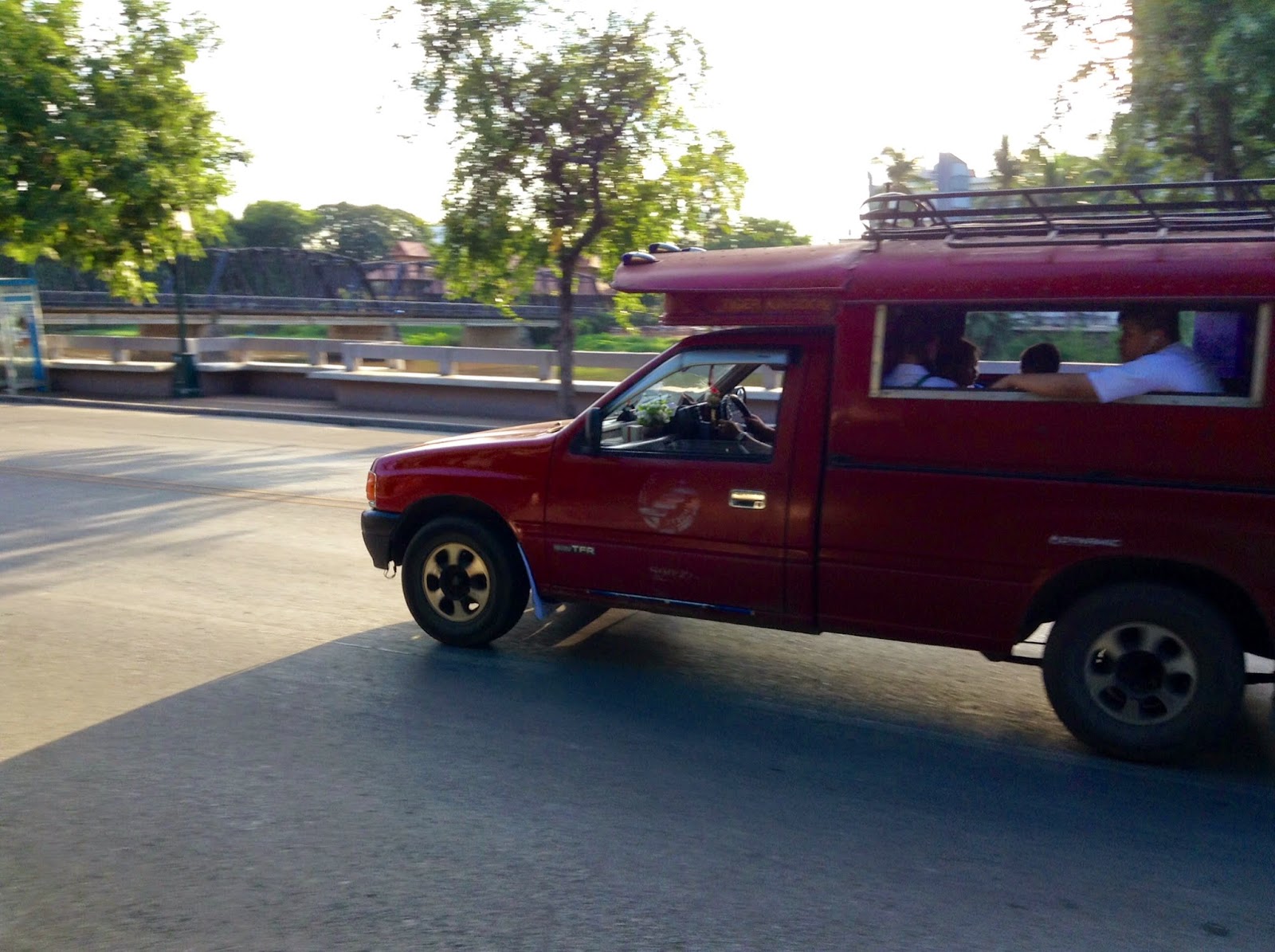
On Monday, after an approximately 30 minute long drive,  some of the Hope Home children and staff arrived via songthaew at Chiang Mai University's Faculty of Associated Medical Sciences. It is within this faculty that the Physical Therapy department is housed.

Following a swift change of attire, as a group we leisurely eased into the hydrotherapy pool. Initially, I found the water noticeably warmer than what I was used to. This temperature is due to the fact that hydrotherapy pools are generally between 33 and 34 degrees Celsius. This warm water is utilized because it  has a relaxing effect and can help decrease muscle tone.

Over the course of the next hour, a variety of activities were performed with the assistance of the physical therapy students. Initially, we began with getting comfortable in the water - floating and splashing around. Though some children acclimated immediately, others were very hesitant and required some coaching.


Afterwards, we formed a circle with each child/caregiver pairing. From this arrangement we sang songs while encouraging the children to move their limbs in the water. At this point in the program you could see each child's personality shine through. The loud and rowdy children needed to thrash about the wildest. The prim and proper princesses showed their enjoyment with grins and giggles.


Subsequently, after a period of time had passed we played a "fetch" type game. The physical therapy student leader dumped a bin of balls - containing a myriad of sizes and colours - into the water. They then instructed the children to collect the balls and place them back in the bin. Here I truly began to see the benefits of this treatment. Children who were do confined on land exhibited such independence and tenacity. Confidence that was initially in the shadows, rose to take centre stage. This moment illustrated in vivid colour the purpose of this therapy.


Finally, to conclude the session we did a series of races. All child/caregiver pairings lined up at one wall and then at the leaders command, moved to the parallel wall. We jumped. We spun. We thrashed about. We laughed. We grew. Whether it was physical, mental or emotional - we all grew.


Thorpe DE, Reilly M. The effect of an aquatic resistive exercise program on lower extremity strength, energy expenditure, functional mobility, balance and self- perception in an adult with cerebral palsy; a retrospective case report. J Aquatic Phys Ther. 2000; 8: 18- 24.

Kelly M, Darrah J. Aquatic exercise for children with cerebral palsy. Dev Med and Child Neurol. 2005; 47: 838- 842.

Geralis E. Children with cerebral palsy: A Parent’s Guide. 2nd ed. Woodbine House, Inc. Bethesda, USA. 1998.

Wednesday, October 8, 2014

Hope Home week 2 (Stacey Braun)

The daily routine. What comes to mind with that phrase? Likely some monotonous, mind-numbing sequence of events that you go through diurnally sprung into your mind. In reference to my life back at home, my daily routine as a student was defined by the following: wake up, get ready, eat breakfast, attend lecture, eat lunch, go to additional lectures or lab, eat supper, study, and finally go to bed. Black and white. It was this basic routine that structured my life. A skeleton.

As anybody who has a general knowledge of the human body will tell you, our skeleton is imperative to our functioning. So the same could be extrapolated about our daily routine - our daily skeleton. With that in mind, I would like to introduce my new skeleton for my day at Hope Home.


At 7:30  I get picked up from the volunteer residence by a red truck or songthaew. After an approximately 30 minute jaunt with some minor traffic and horn honking, I arrive at Hope Home. Upon arrival I am greeted with many "wai's" and "Sawasdeeka's" before getting briefly informed of the plans for the day.

Subsequently, from approximately 8:00-9:30 am it is relax time. Preceding my arrival, the nurses complete feeding breakfast and administering medication. Therefore, my arrival allows them some time to sit and recollect before moving on to the scheduled task. During this time with the children, I provide them with some company and laughter by chatting and playing little games.

Then from 9:30-11:45 am, the tasks become dependent on the day. Mondays are filled with hydrotherapy at Chiang Mai University pool. Normally, Tuesdays are booked at the special school. However, currently the school is on break. Wednesdays are infused with ARI Art Therapy. On Thursdays we travel to Chiang Mai University for physical therapy. Finally, on Fridays the weeks are closed out with a "free day". Each of the above activities provides a different therapy to the children and act to supplement their quality of life tremendously. Thus, in subsequent blogs on the following weeks I will focus on these treatments. What do you do? How do they work? What are the childrens' responses? I will try to address all of these questions.

Conversely, I regress back to my schedule. From 11:45 to 12:15 pm is lunch time. During this time I directly assist with feeding. Though some of the children can eat independently - not all of the children have this luxury. Then after all their bellies have been filled, it is nap time for the children and it is dishes time for me. The slick metal sink and soapy suds essentially wrap up my day as my songthaew arrives to pick me up at 1:00 pm.


If at this point you are thinking, some more pictures would have been nice... Yes, I know. However, I got permission to take photos of the children from Judy Cook to late. Next week I will!

Thanks for reading,
Stacey

Friday, September 26, 2014

From Canada with love

Hello! My name is Stacey Braun and I am from Altona, Manitoba Canada. Before arriving in Thailand I completed my BSc in Biology from the University of Manitoba. So with that fact in mind - why did I chose to volunteer at a placement completely unrelated to science? The answer is simple.

Over 30 months ago I began work at an organization in my hometown called Blue Sky Opportunities. This organization is involved in maximizing the independence of adults with intellectual disabilities. As I commenced in my employment those many months ago, my work morphed from being a way to generate an income to a passion. A passion to serve this under serviced and vulnerable sector. In turn, it is through this found zeal that I selected Cultural Canvas Thailand's Cerebral Palsy Assistance program.


As according to the definition provided by the Mayo clinic, "Cerebral Palsy (CP) is a disorder of movement, muscle gone or posture that is caused by an insult to the developing brain". Notably, CP is one of the most common congenital disorders of childhood. Therefore, it is logical to surmise that multiple children in Thailand are affected by this disorder. Which is the exact conjecture by which Hope Home was founded in 2007.

As stated on the Hope Home website, "Hope Home provides residential accommodation for children with a disability who are orphaned or abandoned, until they are fostered long-term or adopted with a loving family". And it is at this lovely home I will be assisting


In closing, stay tuned each week for an update of my journey here in Chiang Mai and my doings at Hope Home. Though I am not a fervent photographer by any stretch, I will attempt each week to provide some pictorial supplement to my writing.

Thanks for reading!
Stacey

“Without new experiences, something inside of us sleeps. The sleeper must awaken.” – Frank Herbert