Showing posts with label disability. Show all posts

Tuesday, August 8, 2017

CCT Volunteer McKenna Tychsen Second Blog Post (Hope Home)

McKenna Tychsen
Hope Home
{July 9th-July 25th}

A few weeks ago, I said I would go into detail about each of the children! Here you are!

We have 10 children at Hope Home, however, not all of the children live full time at the home. Each child, very unique in their own way, has specific need which we do our best to cater to in each activity we do throughout the day. Here, I go into more depth about the complexities of each child we work with.

1) Bella, 4 years old, (almost 5!!) with a fatty acid oxidation deficiency and a developmental delay. The fatty acid oxidation deficiency is a condition requiring her to eat every couple of hours, If she doesn't, it could be very serious and turn into a hypoglycemic episode. Bella is also deaf in one ear and partially deaf in the other. She is a VERY sweet, intelligent and dedicated little girl with high potential for success, but can distract you easily with her adorable charm to get out of something. During our learning portion each day, Bella is always very attentive and interactive with the lesson. We work with her to improve discipline, fine and gross motor skills as well as basic educational material, such as colors, days of the week, numbers, etc.


2) Little Guy, 2 years old, was born premature with respiratory problems, so had to have a trachea placed in his throat. Now, he is a very active and talkative little boy. Very smart for his age! It is sometimes hard to know if he fully understands English, (for me to understand him at least) however, he has an easier time with Thai and listening to the Thai staff. We are working with Little Guy on his basic educational skills like learning the Thai and English characters and basic words, as well as colors numbers and other beneficial life skills.


3) Tadpole, 3 years old, came to Hope Home when he was about 1 and a quarter years old. He has Down's syndrome and is one of the sweetest and outgoing kids you'll ever meet. His adorable smile and big hugs will get you every time. He has the most energy of all the children, always running around and getting into some sort of ruckus or mess (usually with Little Guy) but is a blast to be around. We work with Tadpole to improve social and mental skills in our education bit and throughout daily skills. We also try and improve his attention span keeping him focused and interacting with others for a longer period of time while staying focused.  We also are working with Tadpole to develop his vocabulary in English and Thai, learning colors, numbers and basic life skills.


4) Yannie, 7 years old, has a developmental delay, but she loves playing shakers and rattlers, coloring and making messes!! She has a contagious and boisterous laugh as well. At Hope Home, we work on Occupational therapy with Yannie. We do repetitive activities such as put certain items from one box to another in order to work on her focus on one activity at a time as well as her fine gross and motor skills.
We've also been trying to improve Yannie's health, so we do fun activities such as bending down, grabbing balls out of one basket and having to lift her body to put it into another basket, like basketball, but repetitive action of shooting the ball in the hoop!


5)  Will, 20 years old, has cerebral palsy and hydrocephalus. He is also recovering from stroke caused by shunt complications. Will struggles with communication. He is non-verbal, but can make some sounds and slightly points to things that he wants. We try to help involve him in activities and learn but at his own pace and capabilities. We also work on his motor skills and mobility with physiotherapy each day.


6) Clark, 12 years old, has cerebral palsy, but is probably one of the most able children I've ever seen with cerebral palsy. He is very intelligent and is able to use his limbs and noises as a clear way to communicate. We have also adapted ways for him to use his communication strengths (such as his legs and feet) to form a device which speaks when he presses the buttons. He know where each button is and what it says, so it is a good way for him to show his expressions without being able to verbally communicate them. We've also been working with Clark on his standing and arm mobility. These are both skills which will aid in helpful daily activities such as eating himself, or brushing his own teeth. Clark has a lot of potential, and from the three months I've been here, I've already seen many improvements. Keep it up Clark!


7) Yindee, 9 years old, has severe cerebral palsy, epilepsy and a chronic lung disease. Yindee has had a rough few weeks, however, maintained a smile the whole way through. There was a bug going around Hope Home and a few of the kids got sick with a cold and a fever. Unfortunately, Joy's immune system isn't strong enough to fight against the bug, and it quickly turned into pneumonia, and due to Joy's previous conditions, it affected her very badly and she had to be taken to the PICU (Pediatric Intensive Care Unit) in Chiang Mai. She ended up staying there for 15 days. She is doing a lot better now though!! She's back at Hope Home. Yindee is a very sweet, beautiful and a true pleasure to be around. She enjoys musical sounds and silly faces!  She has limited muscle control and struggles to sit/ stand or move on her own, in need of assistance in everything, however we are working on it with her! We work with Yindee to help her communication skills (she uses her eyes as a way to say what she wants), motor skills and muscle strength/ mobility with things like holding her head up while sitting.  Eventually Hope Home wants to have Yindee work with an electronic communication aid, but for now, we've made giant charts so we can see the movement in her eyes for communication and learning techniques.


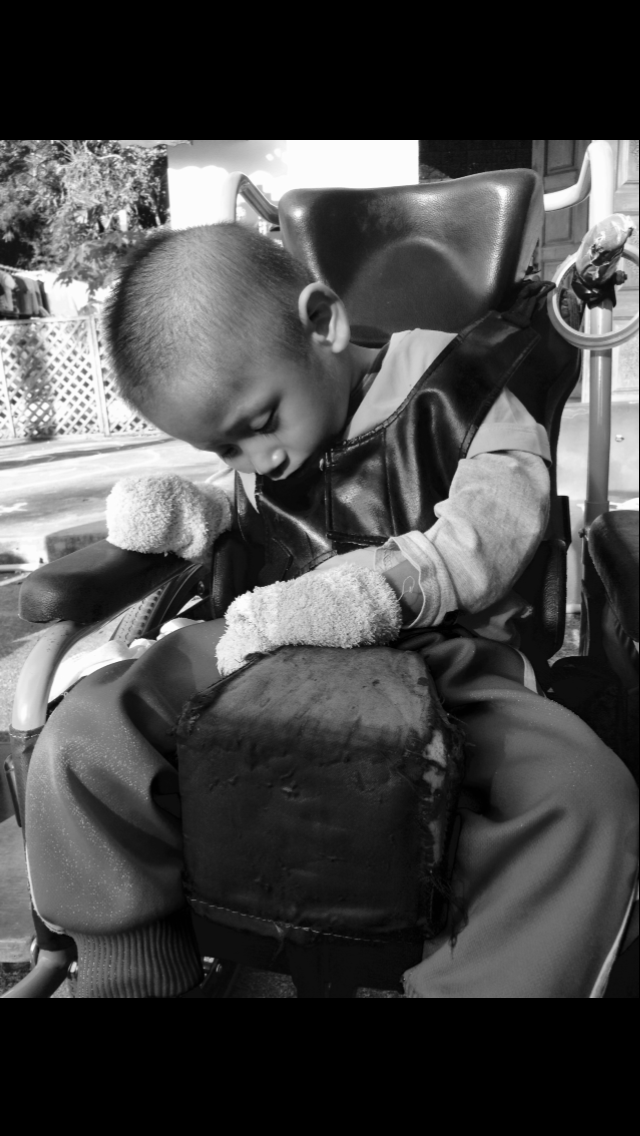
8) Dontri, 5 years old, has cerebral palsy, multi-cystic encephalomalacia (scars on the brain), micro-cephaly (undersized brain), epilepsy, a heart defect, and is blind. Dontri is a sweet little boy with an adorable laugh and smile, but with very little ability to communicate. Dontri is very sensory oriented. He needs a lot of different types of stimuli but not all at once, which may be overwhelming for him. He likes textures, calm music, head being rubbed, being held and certain smells. We've been working on having him sit up when possible so he's not laying on his back all the time (so muscle development), as well as an educational system we developed specifically for him, which includes a brail alphabet in English and Thai. As of now, we can't really tell how much he has retained, but it's a start!


9) Namchock, 10 years old, has Down's syndrome and very poor vision and goes to a special education school during the day. I don't get to spend too much time with Choppy because he leaves for school before I get to Hope Home and comes back just before dinner, and I leave right after dinner. BUT... for the time that I do spend with him, he never fails to put a smile on my face. He has such a unique personality and is a sweetheart. As for what my other coworkers have told me, they work with Choppy on his attention span. He gets very distracted very quickly.


10) Andy- 13 months. Andy was born two months prematurely, however, doesn't express any characteristics of a disability. Because he is so young, it is difficult to tell. However, Andy is very sweet and is just now starting to babble. It is quite the task to get a smile out of him, but once you do, it's the cutes little grin with only two front teeth!  We work with Andy to improve basic motor, cognitive, physical and social skills, such a waving hello and goodbye, putting a spoon into his mouth by himself, drinking out of a cup, putting objects into a box, etc... he seems to be developing quite normally so far. (I have only been here three months, but babies grow fast!!)
He loves to try and walk, with our assistance, but soon he'll be able to do it by himself!


-------------------------------------------------------------------------------------------------------------------------------
As the weeks dwindle down, I can't help but reflect on my time here thus far. From the classes I took at Chiang Mai University, to the friends I've made along the way and the impact the people have made on my life over the course of my three months here. People at Home Home, TEAN friends and every genuinely kind, random person I've met in Thailand. I am incredibly grateful for this opportunity I've been given and have loved and cherished every moment of it.  I couldn't have asked for a better summer, I've learned a lot about myself, a better view on different disabilities and how to adapt to their abilities, Thai culture,  medicine, and the world around me. I'm now headed to travel for a bit but will stop by Hope Home before I head back to the states, for another goodbye!

Sah-wa-dee-ka for now!


Friday, January 30, 2015

Change is Afoot at CCT

Cultural Canvas Thailand and Art Relief International recently bid a sad farewell to its Art Director (ARI) of the last two years, Sarah Lovett. Sarah has been a much loved member of the CCT team and has brought lots of passion, enthusiasm and creativity to the ARI program, not to mention structure and strategy. CCT has been lucky to have her, and we wish her well in her return home to the USA to continue work on her own arts outreach NGO, Paint The World (www.paint-the-world.org). We'll miss you Sarah!

But with sad endings comes new beginnings, and CCT is very excited to introduce its two newest members of the team, Emma and Dan, in the respective roles of Art Director (ARI) and Assistant Director (CCT). Here's a little bit more about them...

Dan Hales


Hi! I'm Dan, from Adelaide, Australia.

I originally completed a Bachelor of Social Work in 2004, before undertaking roles in community development and counselling, predominantly with young people, the LGBTQ community and within HIV Prevention.

Having completed a Graduate Certificate in Tourism (Festival and Event Design and Management) in 2009, I have more recently been working as a Project Coordinator within the arts, festival and community cultural sector.

I am also a qualified Yoga Teacher and a trained dancer.

I volunteered for three months with Art Relief International in 2014, after falling in love with Chiang Mai during previous visits. I enjoyed my time so much I couldn't help but apply for this position when I saw it advertised.

I am extremely passionate about social justice and human rights, and I plan to continue to forge a career in community cultural development and theatre outreach. I also love travelling, the beach and macadamia ice cream!

Emma Gabriel   


Hello, my name is Emma Gabriel and I am the new Art Director for Cultural Canvas Thailand's Art Relief program. I come from Newfoundland, a small island in Eastern Canada, and am happy to call Chiang Mai my new home.

Making the decision to move here has been exciting, as I love to travel and adapt to new settings, learn new cultures, and meet new people!

I have a background in languages and visual art, focusing on an array of media throughout my studies, though my favourite being stained glass and pen and ink drawing. I also love experimenting with new media and have a current fascination with street art, stencils and spray paint.

The other aspect of this position that I love is the ability to help people in using art as therapy. It feels so amazing to create a sense of inclusion and community and to empower, inspire, and educate through art. I couldn't be happier to be a part of this team!

Wednesday, December 10, 2014

Farewell (Stacey Braun)

Pick a city. Any city. Any one of the thousands of thriving metropolis' around the globe.

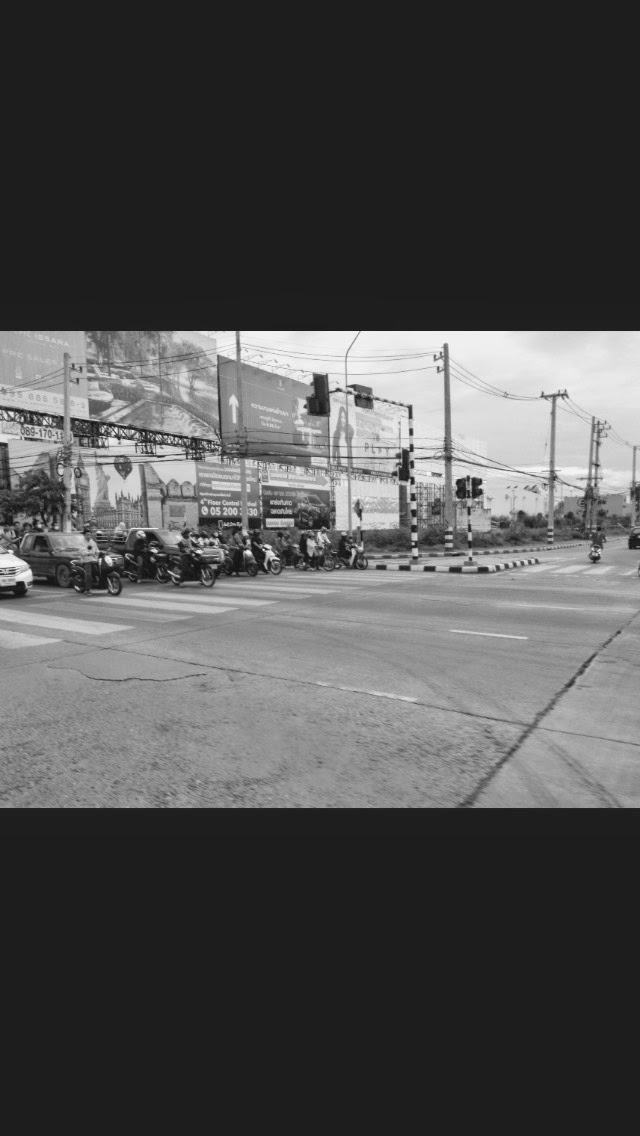
The roadways are blanketed in a chic coat of chrome cement or asphalt as black as night. The polychromatic signage forms an eclectic gallery along each avenue. And amongst all the radiating bulbs and the mod-podge of reverberations, your journey through the city almost always comes to an abrupt halt. A halt at a red light.

Throughout history, the colour red has carried multiple meanings. Red was noted as the hue of extremes. In fact, our prehistoric ancestors saw red as the colour of fire and blood - anger, fear and danger. As the centuries have past, as a species we have evolved from living in caves to driving automobiles and red became recognized as the international colour for stop.


A stop. By definition, a stand still; a termination; a hindrance; a roadblock. A pain-staking colour that signals us to come to a standstill. And though we like to see ourselves as "upgraded models" in comparison to our Neolithic predecessors, our interpretations of red, in this sense, is remarkably similar. For these modern red lights bound within their metallic casings catalyze feelings of frustration and rage within each of us.


However, we don't just encounter these negative red lights on the physical roadway. Instead, as a wise woman once pointed out  in the backseat of a truck, we encounter these unexpected stoppages in our personal lives as well. In fact, being immersed in a foster-care facility in Chiang Mai for children with disabilities has illustrated that exact fact to me each day, for the past 87 days.

Like a pedagogic documentary projecting onto a screen in front of me, my eyes have bore witness and my ears have absorbed through narration each child's different and unique red lights. Each of them has experienced the life roadblock of their disability. The roadblock of all the developmental delays. The roadblock of the health related ailments. The roadblock of the cloud of stigma that surrounds their everyday life in their native land.


Nonetheless, I have not just witnessed these life roadblocks through living beings under the age of ten. Alternatively, two exceptional women have also allowed me to take a peak into their metaphorical closets and absorb their skeletons of roadblocks faced. One has had to experience: the roadblock of moving long-term to a foreign country ripe after academia, and the roadblock of volunteering in a misunderstood field.


The other has had to experience: the roadblock of garnering and juggling funds to help an under serviced  sector, and the roadblock of making decisions invariably linked with the life of vulnerable children.


While cumulatively, both women have grappled with the ever-growing roadblock of holding onto themselves in an environment where it is so easy to lose oneself completely.

In the end, each and every one of us will face red lights; interruptions in our journey forward. But what all of these individuals' life hindrances has shown me is that it is not always about moving forward. Sometimes that extra time spent stopped is a gift - a treasure. Sometimes in that time, you will battle through treacherous rain and hail and your inner strength will grow. Sometimes in that time, you may find an unanticipated route that will change your perspective completely. Or sometimes in that time, you may just have an extra moment to stop, take a breath, and realize all the miles that you've put behind you and all the growth that has already occurred.

Overall - thank you Chiang Mai and Hope Home for all that you have entailed. Thank you, for my trip - my unexpected life stoppage, my red light - has taught me so much.

Monday, December 1, 2014

Cerebral Palsy & Blindness (Stacey Braun)

Visual impairments can result from problems with any part of the visual system, including the eyes, eye muscles, optic nerve or areas of the cerebral cortex that process visual information (Book et. al). Because cerebral palsy frequently affects the visual system, children with CP are more likely to have visual problems than are other children. In fact, according to a study conducted by Black, "up to 75% of children with CP are impaired".

One such of these specific impairments is labelled cortical visual impairment. Cortical  visual impairment or CVI results from injury to the brain's visual centres on the cerebral cortex (Book et. al). A child with CVI is thus able to pick up visual information with their eyes but the child's brain cannot process and interpret the information correctly. It is analogous to an imperfect computer chip which cannot fully process the input from the keyboard.

Generally speaking, the most common CVI symptoms presenting in children include an abnormal light responses, inconsistent visual responses to the same stimuli, and decreased responses to visual stimuli when auditory stimulation is present (Giord et. al). But the loss of vision does not only exhibit itself in symptoms directly related to the field.

When a child is blind they have lost one of their basic senses - they are under stimulated. Many of these children resort to other behaviours and forms of self stimulation to compensate for this under stimulation. These behaviours can include head banging, poking, rocking or staring at sources of light (Edelson). It has been reasoned that the head banging may even provide a form of pleasure related to movement titled kinaesthetic drive.


Though these behaviours can be a negative influence in many spheres, developmentally these behaviours are important for blind children as connections are made in the brain where the body is (Coots).

In fact, in the past two months I have witnessed the importance and predominance of these behaviors. In specific, one CVI-blind child at Hope Home fully engages in these actions, though there are two additional CVI children at the home.

However, though these children may seem lost in their world of behaviors that are difficult to comprehend - these children have NOT lost all of their senses: they still have viable feelings remaining. Most importantly, these remaining sensations need to be exercised to promote development. Presently, at Hope Home the developmental pursuits revolve around two core senses: sound and touch.


Stimulating the sense of sound is one experience that is constantly integrated into these children's lives. A variety of genres of music are being incessantly played on the stereo or sung. In addition, at times the children actively engage in creating their own music using instruments such as tambourines, bells, and drums. Therefore, not only to they to revel in the therapeutic auditory sensation but they also get to experience the tactile stimulation associated with banging ones hand against the firm surface of the percussion instrument.

Similar to the sense of sound, the sense of touch is almost effortlessly innervated into each of the three children's our times. In conjunction with the unintentional "touch" lessons, such as putting on clothes and feeding, toys such as a ball-pits and sensory boards provide opportunities to optimize each of these children's development.


Overall, though their condition has robbed their sight from them like a thief in the night - not all is lost. And this can be no more clearly than in this smile below.


Tuesday, November 18, 2014

More Than Just A Set of Wheels (Stacey Bruan)

According to the AARP, it is estimated that only 5-15% of people who need wheelchairs actually have them. That means that spanning the globe and its seven continents, as many as 350 million people are lacking the support, accessibility and mobility that these devices provide.

In the year 1967, Joni Eareckson Tada became one such of these persons who required a wheelchair. After misjudging the shallowness of the water in Chesapeake Bay, Joni became a quadriplegic at 17 years of age. Following years of struggle and rehabilitation, she founded an organization called Joni and Friends.

Since the year 1979, Joni and Friends International Disability has been dedicated to assisting people affected by disability and those around them. One of the organizations means of doing this is through their program called "Wheels for the World". As according to the program's mission statement, this project "provides FREE wheelchairs to children and adults affected by disability around the world".


As can be extrapolated by the immensity of that goal, this is not a single link chain of delivery but instead it is a step-wise process. Overall, it can be defined by the following steps: drop-off, transportation, restoration and distribution.

Initially, donated chairs are dropped off at specified locations. These chairs are given for a variety of reasons. Sometimes the donor's condition has changed and they require a different chair or no chair at all. Sometimes the donors outgrow their chairs. But regardless of the reason, the chairs are collected. Following collection, the chairs are transported to shipping ports. These ports serve as hubs where each piece of equipment is routed to a different restoration centre.

Currently, "Wheels for the World" operates restoration shops at correctional facilities across the United States. Inmates are trained to restore the chairs to "like-new" conditions. After each of the individual wheelchairs have been mended, they are shipped internationally to various distribution centres. Interestingly, the Kingdom of Thailand is one of these sites.  Though their movement spans the geographical range of the country, Chiang Mai is one site within the country where dispersal occurs.


In fact, on November 11, 2014 I was on hand at an event that occurred at Payap University's Faculty of Nursing. At this event, there were 3 special guests in the spotlight. Two of these guests were selected cerebral palsy children from Hope Home and the third was a foster child affected by Dushenes Muscular Dystrophy.

In a room filled with occupational therapists, physical therapists and mechanics, each child was fitted with a new wheelchair. Firstly, this process began with a subjective interview with the therapists gathering information about the condition and lifestyle of each child. Questions posed ranged from range of motion to the arrangement of each child's home. Progressively, as increasing amounts of information was acquired, the focus was shifted to a more objective view. During this time, measurements were taken. For example, these tabulations included hip breadth and chest width. Subsequently, it was these numbers that were used to determine specifications such as the size of the seat and seat back. Lastly, once all sizes were gathered, the appropriate chair was then selected and the mechanics then altered each chair to fit the child as best as possible.


Though simply owning a wheelchair is imperative, having a proper fitting wheelchair may be exponentially more important. A proper fitting wheelchair can slow the rate of degenerative conditions, prevent scoliosis, eliminate pressure sores and many other secondary disturbances. However, a wheelchair is important for more than just its role as a sponge for medical jargon.

The query of "what does a wheelchair mean to a person" is impossible to intricately answer. Each individual is defined by a unique set of circumstances and variables that would cause infinite variation in their responses. Nevertheless, from an observational perspective I can generally state that a wheelchair means so incredibly much.


A wheelchair can mean that a child previously unable to feed without being physically held, now has increased independence and self-actualization by feeding in the chair. A wheelchair can mean that a child heavily impaired by hypo sensitivity now has an environment that accommodates learning. A wheelchair can mean that a previously confined child now has the tool necessary to experience adventure and personal discovery. Overall, a wheelchair is more than just a set of wheels. A wheelchair provides hope for a fulfilling future.

Tuesday, November 11, 2014

Two Million (Stacey Braun)

Two million. A number that contains a whooping 6 zeros. A number that contains 7 digits. Two million. A number that can be broken down into 2 x one million or 4 x 500,000. But no matter how you approach it, the number commands attention . For this reason, the fact that Thailand has over two million people living with disabilities makes this number an important one (NSO).

Though individuals with disabilities have faced hardships world wide, their challenges have been particularly pronounced in Thailand. So why is this so?    More than 90% of Thais are Buddhist. Accordingly, in the teachings of Buddhism disability is an outcome of a vice that a person had in his/her previous life (Driedger). Because of this, Thai children with disabilities have been viewed by a large number to be useless and worthless (Hill). In fact, the stigma was so predominant that many Thai children with disabilities were kept at home and even denied basic education. Even "with the compulsory Education Act of 1935, the Ministry of Education allowed a child to stay at home because of his/her disability (Sukbupant, Shiraishi & Kuroda).


Furthermore, this trend continued for another half-century following the 1935 act. Before 1998, only 7.3% of children with disabilities in Thailand of school age were receiving an education ("Country Profile on Disability: Kingdom of Thailand", 2002). After this shocking statistic was published, the Ministry of Education designated the year 1999 as the "year of education for disabled persons". Several plans to enlarge educational opportunities for persons with disabilities were drawn up. Largely, this education was to occur through the promotion of inclusive  learning in regular schools. By definition, inclusive learning is an approach to education where students with disabilities spend the majority or all of their time with non-disabled students (Allen & Schwartz). However, contrary to the plans - this idea has not held in practice over a decade later.


Predominantly, Thai children with disabilities receive their educational services through special education schools located throughout the kingdom (Traiwicha). It is at one of these schools, Special Education Centre Region 8, that Hope Home's children attend school. Each of the children spend varying amounts of time at the school catered toward their individual needs. For example, one child attends every day all day. Whereas, some attend once a week.

So what doss their learning consist of at Special Education Centre Region 8? The intellectual lessons include activities such as counting and colouring. Whereas, the physical components range from threading (for hand-eye coordination) to physical and occupational therapy. Chiefly, the later of these lessons are what I have specifically witnessed.


From passive stretching and ring stacking to light therapy - a variety of therapeutic avenues were travelled on Tuesday. Overall, I would say that the children seemed to enjoy this change in sensory environment. However, such a stimulating day lead to some overload and exhaustion.

Though I do value that these children are getting the best education available to them and their providers, I cannot help but wonder where 1999's plans got left. Still to the date, less than 40% of Thai children with disabilities actually attend inclusive school programs (Traiwicha). Yet, time and time again studies have illustrated the benefits of inclusive education.


As illustrated by a study comparing integrated and segregated students with disabilities, "disabled children in the integrated sites progressed in social skill development whereas segregated children regressed" (Sale & Carey). In fact, additional studies have demonstrated "increased self esteem, increased motivation, and increased completion of learning goals" in students with disabilities in inclusive education settings.


However, the reason I believe that inclusive education should be the end-goal for Thailand is not just for its benefits for disabled children. Research has shown  that non-disabled students in inclusive school settings show remarkably improved perception and increased positive attitudes towards people with disabilities (Bennett et al). As Gandhi so clearly highlighted, "if we are to reach real peace in this world, we shall have to begin with children". Therefore, if the end goal is to change the perspective towards disability in Thailand - inclusive education may serve as a catalyst for this movement.


Wednesday, October 8, 2014

Hope Home week 2 (Stacey Braun)

The daily routine. What comes to mind with that phrase? Likely some monotonous, mind-numbing sequence of events that you go through diurnally sprung into your mind. In reference to my life back at home, my daily routine as a student was defined by the following: wake up, get ready, eat breakfast, attend lecture, eat lunch, go to additional lectures or lab, eat supper, study, and finally go to bed. Black and white. It was this basic routine that structured my life. A skeleton.

As anybody who has a general knowledge of the human body will tell you, our skeleton is imperative to our functioning. So the same could be extrapolated about our daily routine - our daily skeleton. With that in mind, I would like to introduce my new skeleton for my day at Hope Home.


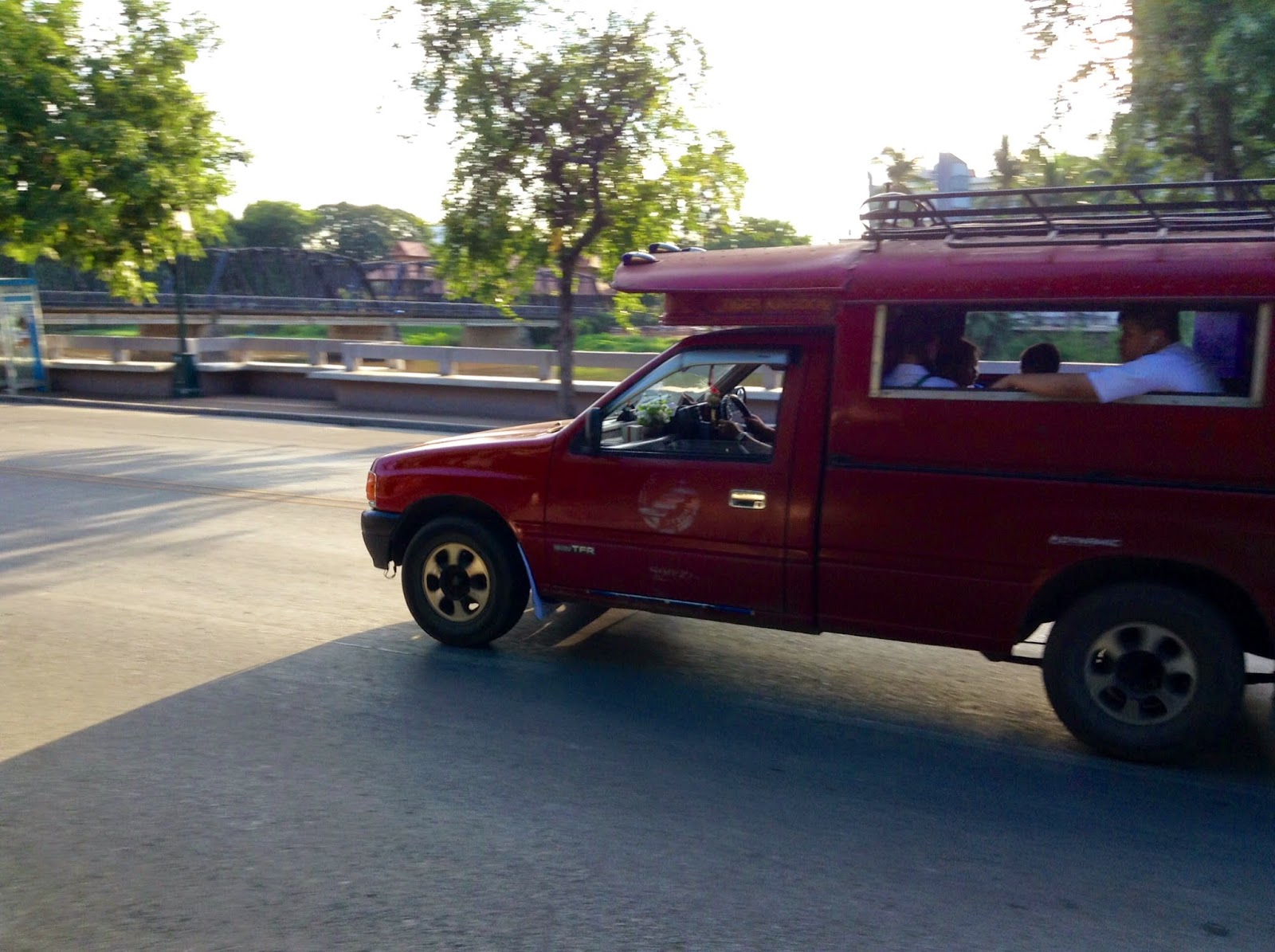
At 7:30  I get picked up from the volunteer residence by a red truck or songthaew. After an approximately 30 minute jaunt with some minor traffic and horn honking, I arrive at Hope Home. Upon arrival I am greeted with many "wai's" and "Sawasdeeka's" before getting briefly informed of the plans for the day.

Subsequently, from approximately 8:00-9:30 am it is relax time. Preceding my arrival, the nurses complete feeding breakfast and administering medication. Therefore, my arrival allows them some time to sit and recollect before moving on to the scheduled task. During this time with the children, I provide them with some company and laughter by chatting and playing little games.

Then from 9:30-11:45 am, the tasks become dependent on the day. Mondays are filled with hydrotherapy at Chiang Mai University pool. Normally, Tuesdays are booked at the special school. However, currently the school is on break. Wednesdays are infused with ARI Art Therapy. On Thursdays we travel to Chiang Mai University for physical therapy. Finally, on Fridays the weeks are closed out with a "free day". Each of the above activities provides a different therapy to the children and act to supplement their quality of life tremendously. Thus, in subsequent blogs on the following weeks I will focus on these treatments. What do you do? How do they work? What are the childrens' responses? I will try to address all of these questions.

Conversely, I regress back to my schedule. From 11:45 to 12:15 pm is lunch time. During this time I directly assist with feeding. Though some of the children can eat independently - not all of the children have this luxury. Then after all their bellies have been filled, it is nap time for the children and it is dishes time for me. The slick metal sink and soapy suds essentially wrap up my day as my songthaew arrives to pick me up at 1:00 pm.


If at this point you are thinking, some more pictures would have been nice... Yes, I know. However, I got permission to take photos of the children from Judy Cook to late. Next week I will!

Thanks for reading,
Stacey

Friday, September 26, 2014

From Canada with love

Hello! My name is Stacey Braun and I am from Altona, Manitoba Canada. Before arriving in Thailand I completed my BSc in Biology from the University of Manitoba. So with that fact in mind - why did I chose to volunteer at a placement completely unrelated to science? The answer is simple.

Over 30 months ago I began work at an organization in my hometown called Blue Sky Opportunities. This organization is involved in maximizing the independence of adults with intellectual disabilities. As I commenced in my employment those many months ago, my work morphed from being a way to generate an income to a passion. A passion to serve this under serviced and vulnerable sector. In turn, it is through this found zeal that I selected Cultural Canvas Thailand's Cerebral Palsy Assistance program.


As according to the definition provided by the Mayo clinic, "Cerebral Palsy (CP) is a disorder of movement, muscle gone or posture that is caused by an insult to the developing brain". Notably, CP is one of the most common congenital disorders of childhood. Therefore, it is logical to surmise that multiple children in Thailand are affected by this disorder. Which is the exact conjecture by which Hope Home was founded in 2007.

As stated on the Hope Home website, "Hope Home provides residential accommodation for children with a disability who are orphaned or abandoned, until they are fostered long-term or adopted with a loving family". And it is at this lovely home I will be assisting


In closing, stay tuned each week for an update of my journey here in Chiang Mai and my doings at Hope Home. Though I am not a fervent photographer by any stretch, I will attempt each week to provide some pictorial supplement to my writing.

Thanks for reading!
Stacey

“Without new experiences, something inside of us sleeps. The sleeper must awaken.” – Frank Herbert